
Quick Take: Groundswell Dispatches
What it means when the first talk of the day at a regenerative farming festival is about national security…
At 9am on the second day of Groundswell, more than 300 people packed into a tent, with more people spilling into the standing areas and onto the grass outside. They’d come to hear Daniel Zeichner, Ali Morpeth, Jimmy Woodrow, and chair Emily Norton talk about food security as national security, covering cyber threats, crop dependence, and fragile supply chains. A decade ago that session would have been a hard sell at a festival built around soil health, but this year the tent overflowed with interest.
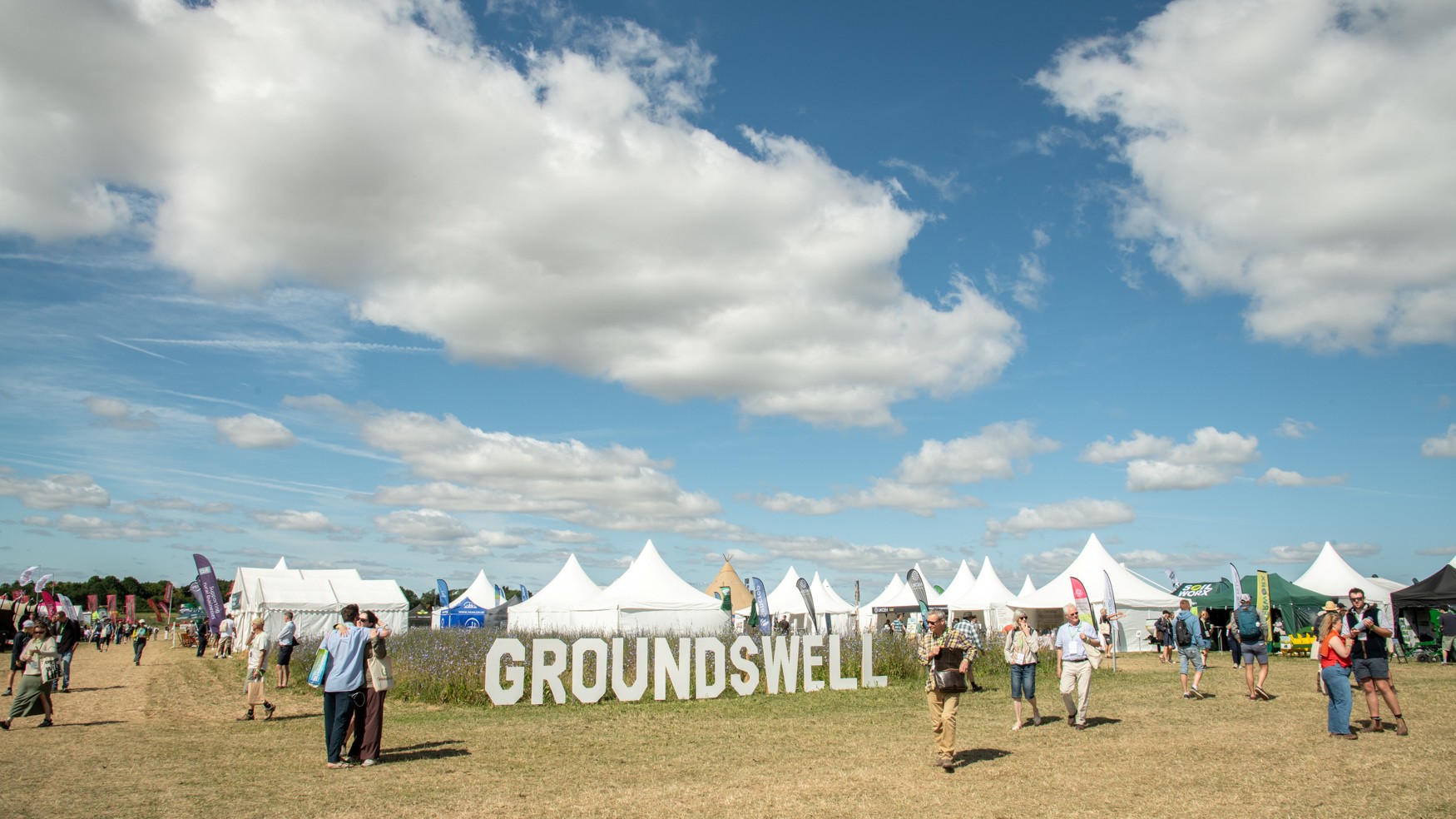
Groundswell marked its 10th anniversary last week. The festival began in 2016 as a gathering of 500 no-till enthusiasts on the Cherry family’s Hertfordshire farm and now hosts nearly 500 speakers alone. It shows how regenerative farming has moved from the fringes to centre stage in UK farming.
Root and Reason was there in force. We organised the ‘food security as national security’ panel that opened the second day, and ran five sessions in our own tent. Around 40 people played the Barefood game, plus panels on aligning farm data with supply-chain demands, food justice and equitable access, the role of grasslands in a net zero livestock sector and whether the language we use to describe land use helps or hinders the transition. We also hosted a VIP knowledge exchange event on farming innovation. The Defra Secretary of State and a DESNZ Minister for Climate both stopped by for a chat too.
Here are our dispatches on security, trust, and why, ten years in, there’s real reason for hope.
Diversity is the missing ingredient
The food security panel’s biggest concern was around the narrowness of our food system. According to FAO, around 75 per cent of the global food supply comes from just 12 crops and 5 animal species, and the UK compounds its exposure through dependence on imported soya for livestock feed. Chicken became the panel’s proxy for the problem. It now makes up around half the meat we eat today, its rise driven by affordability and fast food marketing, which local authorities lack the resources to restrain.
Optimising for cheapness alone has left us vulnerable. One panellist admitted how difficult it is to ask publicly what balance of foods we want in our future diet. Regenerative practice on farms, another warned, “is never going to fix a degenerative supply chain” compromised by buying practices, financial mechanisms and government’s approach to addressing the problems. Some of the solutions, as it turns out, are already being trialled, as the next dispatches show.
Trust is the infrastructure
Trust came up repeatedly throughout the festival. The panel was frank about the damage recent policy has done to farmer confidence, and about obstacles inside government, including a Treasury that other departments still find opaque. Devolution could deepen the disconnect or become an opportunity, but only if farmers are involved early and national budgets reach the local level where trust is built.
Conversations in our tent reflected the same theme. Farmers navigating the transition face a flood of products, schemes and standards, and the question they ask is “who can I trust?” Repeatedly, the response was other farmers, which is why peer-to-peer learning has been Groundswell’s approach for a decade. One speaker added a warning: Groundswell is still a bubble, and regenerative farming will only scale if it is made deliberately inclusive, meeting farmers where they are. Readers of our January dispatch from the Oxford farming conferences will recognise this well.
Gaming the future
At the live session of Barefood, some 40 participants played the game that puts participants in the roles of producers, retailers, ag-tech innovators, citizens, government, financiers and distributors and asks them to steer the food system through crisis. The players backed regional response networks, a public-private adaptation fund, strategic food reserves and AI-enabled monitoring, viewing private finance as a key way to scale regenerative farming. They faced a drought, and then surprise events that included invasive tree pests, and a mosquito-borne virus. They successfully averted a food shortage, but the use of reserves pushed up prices, and overall trust in the system fell. Players concluded that the missing intervention was a national dialogue about food and how its story gets told. One hour offers a glimpse of the longer format game, but when handed control, Groundswell players focused on preparation.
The future is already in the ground
At our VIP knowledge exchange event bringing together researchers, agri-tech firms and farmers, the message throughout was that adaptation is already under way. UKCEH has horizon-scanned over 160 potential crops for a warming UK and, through the AgZero+ programme, has grown rice successfully on re-wetted Fenland soils for the first time. NIAB is breeding chickpeas and other legumes to reduce our dependence on imported soya. The Soil Association’s Innovative Farmers network is running field labs to revive flax, grown here since the Bronze Age, for a low-carbon UK supply chain. Earth Rover’s autonomous, solar-powered robots kill 60 weeds a second without chemicals or tillage – based on the Mars Rover. Meanwhile Hutchinsons’ Omnia software and Rothamsted’s work with the North East Cotswold Farmer Cluster are turning field data into decisions farmers can act on. The recurring lesson was the power of farmer-driven research: evidence is best when it addresses the questions farmers are actually asking. Connecting that practical, on-the-ground experience with research and policy is exactly why Root and Reason exists.
What we’re left with
The warnings at Groundswell were stark, and intentionally so. But the event’s most useful line came from Rosie Boycott, who drew a parallel to second-wave feminism: a movement that looked impossible until organised, persistent people made it ordinary.
Groundswell itself is evidence of the same. Ten years ago 500 farmers gathered in a field to talk about soil; last week, ministers came to them. Change on that scale did not wait for a crisis. It was shaped deliberately, by people who chose a direction and started moving in it. That is the work for the food system as a whole. Let’s get going.