
Newsletter – June 2026
30 June 2026
This is our newsletter for June 2026. Please note that this page is not updated, so deadlines may have passed and links may no longer work. To receive future newsletters, please join our network.
Save the date for our July Webinar: Falling in Love with the Future – imagination as a tool for resilience
21 July 2026, 12-1pm
We are good at imagining how things fall apart. Picturing a future we actually want to live in, and believing it is possible, turns out to be much harder, and Rob Hopkins (co-founder of the Transition movement) argues that this failure of imagination is one of the biggest barriers to change we face. If we cannot picture a better food system, why would we work to build one?
More soon!
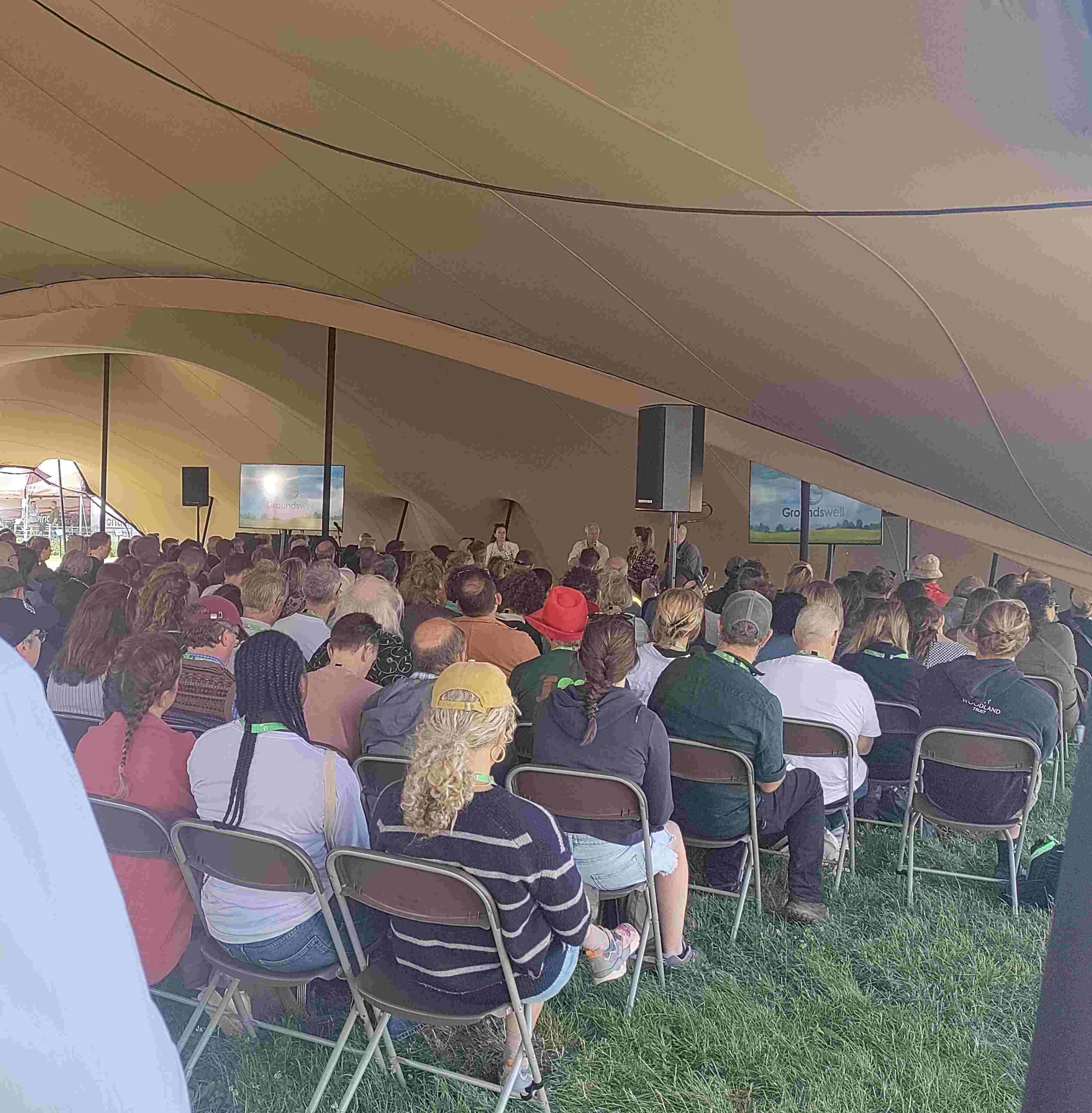
Join us at Groundswell 2026
1-2 July, Hertfordshire
This year, we’re hosting a tent with our friends from Land Use for Net Zero Nature and People (LUNZ) Hub, LUNZ Grasslands, LUNZ Openland, LUNZ JustLanz, Transforming UK Food Systems, Eunomia, and Backcasting to Achieve Food Resilience in the UK.
Wednesday 1 July in C28 – the Root and Reason tent
- 1pm – Measuring what matters: Aligning farm reality with supply-chain needs
- 3pm – Community Power from Farm to Fork: Advancing Food Justice & Equitable Food Access
Thursday 2 July in C28 – the Root and Reason tent
- 10am – Farming well for the future: How grasslands can help meet sustainability challenges
- 12pm – Playing with Food: A Serious Game to Stress-Test UK Food System Resilience
- 2pm – The Language of Land Use: Is it part of the problem?
Thursday 2 July on the Soil Stage:
- 9am – Food Security IS National Security: Is UK farming ready?
In case you missed them
Digest: From plans to practice – what it takes to prepare a city for the next food crisis
When Covid-19 hit, Bristol’s community organisations mobilised at speed to get food to vulnerable residents, turning improvised, hard-won lessons into something a city can plan around so that next time, communities are not starting from scratch. The Bristol Food Disaster Risk Planning project distilled this response into four key findings—three things that made it work, and one ‘loud’ lesson—arguing that real preparedness is largely invisible and must be funded before a crisis, not during it. While Bristol isn’t claiming to have “cracked it”, this emerging framework offers a vital model for community-level preparedness and food system resilience
Digest: A tempestuous spring – the climate assessment that puts food security centre stage
This spring delivered two reminders of how exposed the UK food system has become to compounding climate and geopolitical shocks. From the closure of the Strait of Hormuz disrupting critical supply chains to the Climate Change Committee’s assessment warning of deepening import vulnerabilities, these events frame the central question running through this digest: how long can the UK’s hands-off, market-led approach to food survive?
News from the wider agri-food sector
Events
IFST Oxford Food Summit 2026: Driving Food System Chang
9 July in Oxford
This summit brings together voices from across academia, industry, policy, and advocacy—all focused on one shared goal: building food systems that are more sustainable, resilient, and equitable. It’s a fantastic opportunity to connect, exchange ideas, and explore how science and innovation can help shape the future of food.
EDI-Centred Facilitation Training from LUNZ Hub
9 July in Newcastle
This training is designed to build the inclusive facilitation skills needed to ensure diverse voices are genuinely heard and integrated. A participant of the first workshop said “It was a wonderful session, delivered succinctly with plenty to take away.”
Sessions during the day will include:
- Self-Awareness and Cultural Awareness
- The Role and Impact of Bias
- Principles for Respectful Inquiry and Inclusive Language
- How to Create an Inclusive Meeting Space
Deadline to register: Tuesday 7 July
Opportunities:
New Horizon Europe Opportunities: Climate Resilience & Healthy Soils
Collaborative European funding is open to UK organisations through Horizon Europe 2026–2027 Work Programmes. The Adaptation to Climate Change mission focuses on helping local communities understand climate risks and deploy real-world resilience strategies. Operating alongside it, the A Soil Deal for Europe mission has a strong social science emphasis, funding cross-border “living labs” to co-create sustainable land management practices and protect food security.
UK businesses, charities, and non-profits are eligible for direct grant funding but must apply as part of a multi-country consortium. Innovate UK Business Connect is offering free partner-matching support and proposal workshops to help UK applicants build their networks.
Find out more about Climate Change Adaptation Calls and A Soil Deal for Europe Call.
Sector transition: UKRI policy fellowships 2026
Apply for this sector transition fellowship to transfer knowledge and skills across academic and policy sectors and increase sector porosity. You will spend 18 months as a UK Research and Innovation (UKRI) core policy fellow, a Natural Hazards and Resilience policy fellow or a What Works Innovation fellow to inform policy to address pressing national and global challenges.
The full economic cost (FEC) of your project can be up to:
£180,000 for Core Policy fellowships
£220,000 for What Works Innovation fellowships
£280,000 for Natural Hazards and Resilience fellowships
Closing date 10 September
Find out more
Resources:
Broken Plate 2026: New insights into the state of our food system
The Food Foundation has published its 2026 Broken Plate report and has taken it to Parliament to share the findings with policymakers and changemakers.
This flagship publication documents the health of the UK’s food system, how it shapes our lives, and what must change to make healthy, sustainable diets available and affordable to everyone.
This year’s report features 16 key metrics – including several new ones, which together highlight the profound impact the food environment is having on people and the planet.
From the Ground Up – A report of the
Citizen Advisory Council’s What Works Here Inquiries
In late 2025, the Citizen Advisory Council (CAC) ran ‘What Works Here Inquiries’ in four very different regions of England: Cornwall, York and North Yorkshire, Liverpool and Merseyside, and the North East. The CAC met more than 80 people, with different connections to food systems: those who grow, catch, make, sell and share food for a living, and those with responsibilities for the health and prosperity of their regions – doctors, council leaders and mayors.
In every region, people are already creating real value for their communities through food, despite a food economy optimised for cheap calories and shareholder profits.
This report outlines the barriers that hold good food back and regional and national actions that can make food work better. These findings will feed into the government’s Good Food Cycle.
Unlocking Commercial Growth for Beans
The opportunity for beans to unlock commercial growth has never been stronger. Consumer appetite for these fibre-rich, protein-dense, foods is growing against the backdrop of rising food prices and living costs.
What’s missing is deliberate commercial action to turn that momentum into sustained category growth over the long term.
This playbook – specifically aimed at people within commercial and buying teams – offers a commercial guide, built on insight from a retail audit and a curated industry workshop of UK retail, brands and manufacturing leaders, features a set of commercially grounded growth levers, and practical actions that businesses can use now.
Your views needed:
Explore WRAP’s new FEID tool: test and feedback
WRAP has recently launched a new data tool providing users with easy access to robust, user-friendly data on food emissions. The Food Environmental Impact Database (FEID) tool has been developed as part of the Defra-funded LED 4 Food project. With searchable global datasets, emissions breakdowns, and clear guidance, it’s designed to support better, faster decision-making.
It is available to use now, and WRAP are currently looking for businesses to test and feed back on its features before moving into the final development phase later this year.
Provide Feedback – Deadline: 5 August 2026