
Newsletter – July 2026
29 July 2026
This is our newsletter for July 2026. Please note that this page is not updated, so deadlines may have passed and links may no longer work. To receive future newsletters, please join our network.
Save the date for our September Webinar: From Resilience to Justice – what would it take to transform the food system?
29 September 2026, 2-3pm
We’ll be taking a summer break, so there’s no August webinar, but we’re already looking forward to hearing from Professor Molly Anderson – a leading scholar of the right to food in wealthy nations and a member of the International Panel of Experts on Sustainable Food Systems (IPES-Food) – in September, so please save the date!
Who gets seen on the land? Free downloadable images
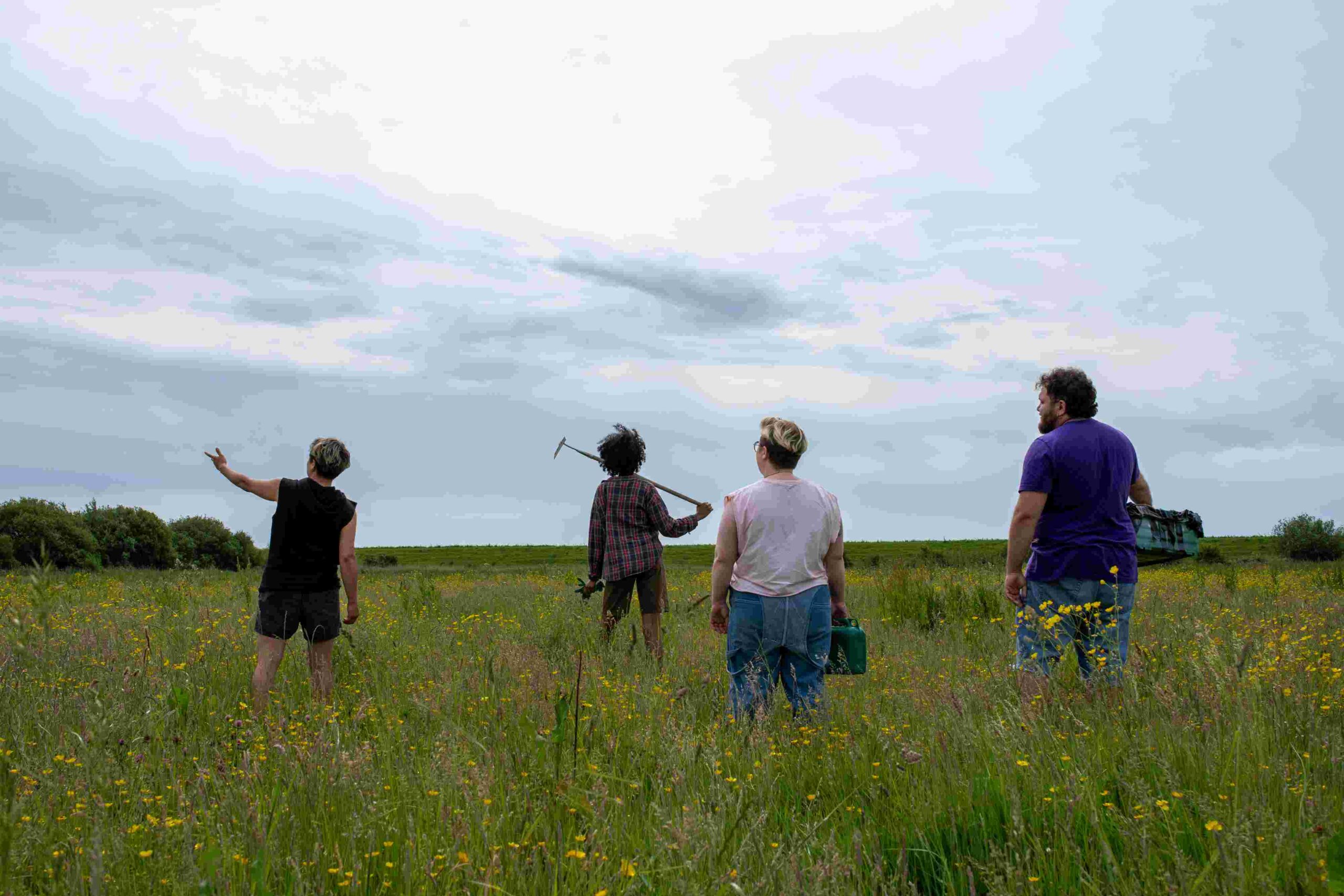
How do we tell a truer, more inclusive story of the UK’s food and farming sectors? It starts with what—and who—we see.
We are proud to have partnered with Culture Roots Collective, ELEVATE, and photographer Phoebe Davies to help shape ‘Who Gets Seen on the Land?’
This brand-new, accessible image bank features over 100 free, downloadable photos of farmers and landworkers from communities that have historically been underrepresented in agricultural media, marketing, and advocacy.
Explore the gallery and download the images
In case you missed them
Groundswell – Quick take
Read our quick take from Groundswell 2026 – Security, trust, and why, ten years in, there’s real reason for hope.
Digest: De-escalating the food fight – trust, language, and the future of food system change
If you ask a room of food system professionals whether they are open-minded, nearly every hand goes up. But when you ask when they last changed their mind about something core to their identity, hands come down. Food futurist Jack Bobo has been running that experiment on audiences for years, and he opened our latest webinar with it, because it exposes the gap between how open we believe we are and how we actually respond when our views are challenged.
Watch our July webinar: Falling in Love with the Future – imagination as a tool for resilience
Hear Rob Hopkins (co-founder of the Transition movement) answering your questions and discussing how not being able to imagine a future we actually want to live in and believing it is possible is one of the biggest barriers to change we face.
Digest: “Good growth in every post code” – What a Burnham Premiership Could Mean for UK Food System Transformation
Andy Burnham became PM last week promising “good growth in every postcode”. What does it mean for UK food and farming?
🔸 Burnham has arrived in Downing Street promising to rewire how government works through deepening devolution – and not much (so far) to say about food and farming.
🔸 That presents an opportunity: food could be built into regional economic strategy through public procurement, local supply chains, and skills, and then routed around the Whitehall gridlock that stalls national food policy.
🔸 The risks are resilience that varies region-by-region, and a city-first agenda that sidelines rural Britain and the farmers who underpin it.
🔸 Bottom line: the prize isn’t new food policies, it’s new ways to deliver. And it only pays off if local delivery is matched by national coordination and a rural voice.
News from the wider agri-food sector
Events:
FOOD 2030 Networks Conference 2026: Public engagement and impact towards food systems transformation
25 – 26 September in Dublin, Ireland
The event will showcase how projects and living labs within the FOOD 2030 Networks are generating meaningful public engagement and tangible impact for food systems transformation. With plenary and parallel sessions, the conference will focus on how public engagement and citizen empowerment can strengthen the science-practice-policy interface and support evidence-based advocacy for societal impact.
Who should attend: stakeholders from the private, public and civil society sectors and academia, working on public engagement, citizen empowerment and advocacy, including EU project partners and living labs coordinators.
Opportunities:
Research Associate position at the Centre for the Study of Existential Risk (CSER)
CSER is looking for a Research Associate interested in environmental issues related to catastrophic risk, particularly analysing their global effects and designing interventions to improve planetary health. This role would suit someone with a PhD in a technical field, who is developing their research agenda and interested in exploring the connection between their specialism and extreme global risks.
The role involves conducting independent research, engaging with academic and policy communities, and developing a broad research agenda. It is fixed-term with funding available until 30 September 2028, and they welcome applicants who wish to be considered for full or part-time hours.
Deadline for applications 9th August
Round 3 of the UK–Switzerland Bilateral Call for Joint Innovation Projects.
Delivered in partnership with Innosuisse, this call supports collaborative R&D projects between UK and Swiss partners in semiconductors, life sciences and engineering biology, helping bring innovative solutions closer to market.
UK organisations can apply for up to £450,000 in grant funding, covering up to 70% of eligible project costs depending on business size and project type.
To be eligible, projects must involve at least one UK and one Swiss business and demonstrate clear innovation and commercial potential.
Closing date 3rd September
Resources:
Farming Roadmap 2050: Growing England’s Future
At the end of June, Defra published the Farming Roadmap 2050: Growing England’s Future, a 25-year strategy for English farming that looks ahead to 2050 with detailed actions to 2030. Defra describes it as the most significant moment for English agriculture since the Second World War, with the stated aim of making farming profitable, productive, sustainable and resilient.
The roadmap sets out a more targeted approach to Environmental Land Management payments alongside a greater role for private finance, and introduces new measures including a Farming and Food Partnership Board, sector growth plans starting with horticulture and poultry, a £30 million Farmer Collaboration Fund, and continuation of the Seasonal Worker visa route to at least 2030.
Read the full policy paper here
New roadmap explores pathways for scaling UK pulses
Pulses are increasingly recognised for their potential to support healthier diets, improve farm resilience and contribute to climate and nature goals. Yet in the UK, pulse consumption remains relatively low, and most domestically grown pulses are still used for animal feed rather than direct human consumption.
A new roadmap, developed by researchers at the Food System Transformation Group, Environmental Change Institute and the Agricultural Resilience Impact and Innovation Hub (AGRIIH), University of Oxford, brings together evidence and insights from stakeholders across farming, food manufacturing, retail, policy and civil society to explore what it would take to scale UK pulses by 2035.
Rather than identifying a single solution, the roadmap highlights four priority areas for action, including strengthening demand, investing in processing infrastructure, improving grower viability, and supporting innovation across multiple pulse value chains.
From the Ground Up – A report of the Citizen Advisory Council’s What Works Here Inquiries
In late 2025, the Citizen Advisory Council (CAC) ran What Works Here Inquiries in four different regions of England: Cornwall, York and North Yorkshire, Liverpool and Merseyside, and the North East. The CAC met more than 80 people, from those who grow, catch, make, sell and share food for a living, to those responsible for the health and prosperity of their regions.
This report outlines the barriers that hold good food back and regional and national actions that can make food work better. The findings will feed into the government’s Good Food Cycle.
Food and Weight Management: Fixing the food environment
With 66% of UK adults and over 10% of reception-age children living with overweight or obesity—costing the nation £74.3 billion annually—current government policies are failing. Designed to shift the focus from individual blame to systemic reform, this report from the UK Parliament Health and Social Care Committee presents bold preventative recommendations centered on food policy to reshape our obesogenic environment.
To reverse this crisis, the authors urge the UK government to mandate healthy food sales targets for large food businesses, upgrade the Healthy Start voucher scheme, and close aggressive junk food marketing loopholes across outdoor media and sports sponsorships. Ultimately, the report calls on policymakers to prioritize public health over food industry interests and push major retailers to make genuinely healthy food affordable and accessible.