
Digest: From plans to practice – what it takes to prepare a city for the next food crisis
When Covid-19 hit, Bristol’s community organisations mobilised at speed to get food to vulnerable residents. Much of that response was improvised, built on volunteer goodwill, emergency grants and relationships formed in the moment, and as the funding later tailed away, much of what had been learned risked going with it.
We know the UK food system is vulnerable to shocks; what is far less clear is what being ready for them actually looks like on the ground.
That is the gap the Bristol Food Disaster Risk Planning project set out to address. A collaboration between Bristol Food Network, Feeding Bristol, the University of the West of England and the University of Bristol, the project was run over the last couple of years and involved working with the people at the heart of Bristol’s Covid response to turn improvised, hard-won lessons into something a city can plan around so that next time, communities are not starting from scratch. Presenting the forthcoming findings at our latest resilience webinar, Bristol Food Network director Heloise Balme made the case that community-level preparedness is an essential layer of food system resilience in its own right. Here’s what the project found.
Quick Take
- The research distilled the response into four findings: three things that made it work, and one lesson. The enablers were the cross-sector networks and partnerships that formed under pressure, flexible emergency funding that let small organisations act fast, local knowledge that helped identify who needed support. The lesson, which Balme called the ‘loud’ finding, was that training and support needs to built into future disaster planning for food for the wellbeing of the people doing the work.
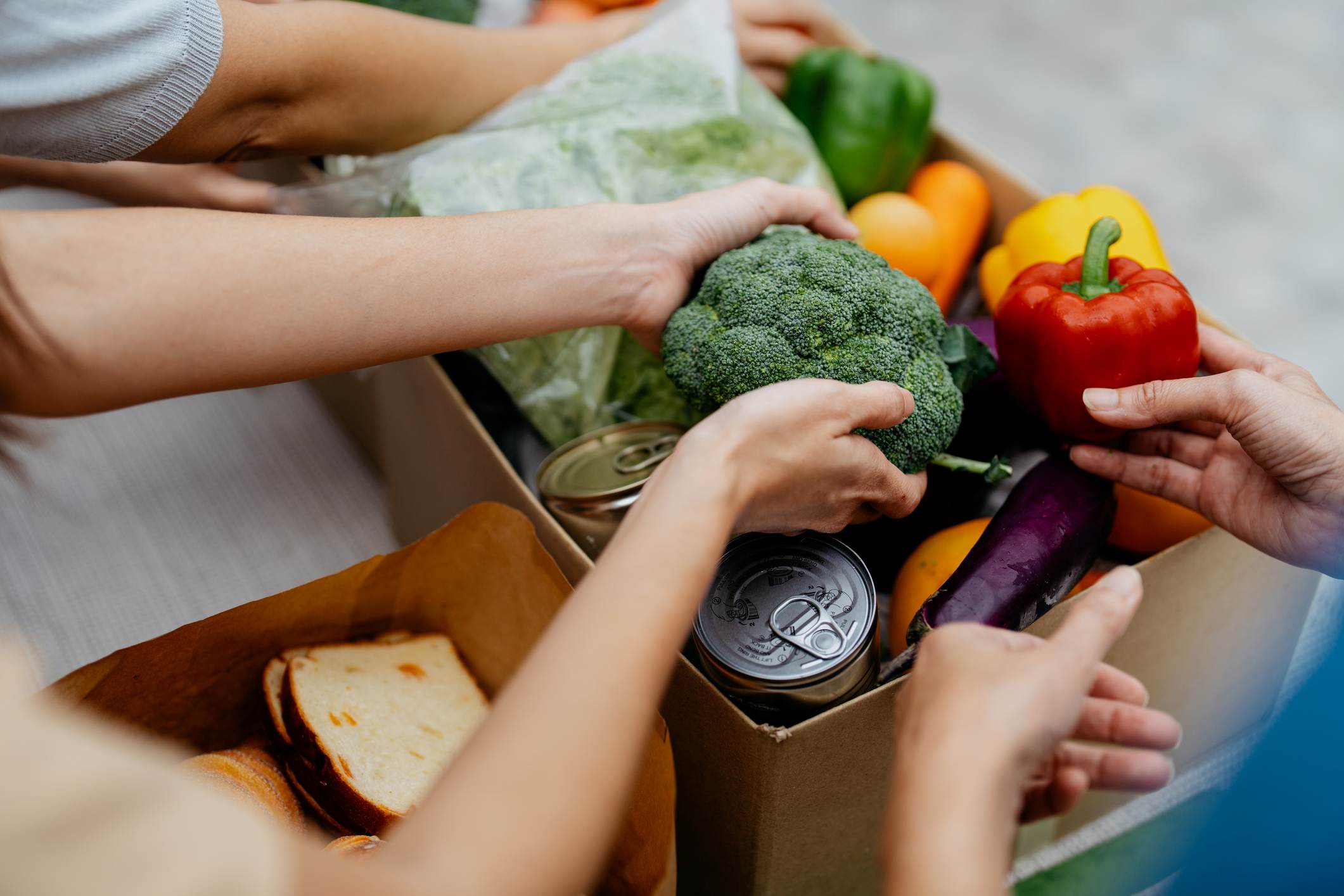
- A good crisis response is measured in dignity, not just calories. One of the clearest lessons was that nationally-procured, standardised food parcels often missed the mark, arriving without regard for what people could actually eat. It was local community organisations, many of them not food organisations at all, that made sure food was culturally and dietarily appropriate, a strength that emerged from grassroots action rather than central planning.
- Bristol’s answer is a standing partnership. Rather than starting from scratch next time, the emerging plan centres a permanent coordinating group of community organisations and local government including the council’s civil protection, public health and community development teams, networked to a wider set of specialist partners ready to deliver.
- Real preparedness is largely invisible, and has to be funded before a crisis, not during it. Much of what makes a fast response possible is unglamorous background work: mapping who does what, maintaining data and infrastructure, and keeping communication channels open. The project argues this requires sustained investment in the voluntary, community and social enterprise sector, not just emergency money once a crisis strikes.
- Local action can do a great deal, but not everything — and Bristol isn’t claiming to be special. The work focused on emergency response rather than long-term food security or production, and Balme was candid that the boundary between the two is blurred. She was equally clear that Bristol hasn’t “cracked it,” and is one of around 120 food partnerships nationally, making the framework that the Bristol project is recommending, if sustained, a model others could adapt.
Deep Dive
The plan was built by the people involved in the response
The project’s authority is based on how it was made. Rather than analysing from the outside, the team co-produced it with around 40 individuals and organisations who had been at the centre of Bristol’s Covid food effort, including community organisations, charities, food businesses, local producers and council teams. Academic partners interviewed roughly 20 of these people, then ran a series of workshops, training in a trauma-informed approach first because revisiting the pandemic was hard for many.
The workshops moved from reconstructing what happened, to what had worked and what people would change, to setting priorities. By the third, civil protection officers and several councillors had joined, which Balme said let community and council partners speak frankly about what hadn’t worked and what each needed from the other. A final session tested the thinking against other disaster scenarios through a crisis game, and the academics produced a network map and a timeline charting where burnout was highest and funding was most available.
Speed is not the only measure of a good response
When central government distributed standardised food parcels during the pandemic, they frequently failed on appropriateness, arriving without regard for cultural or dietary needs. Community organisations, many of which did not work in food at all, drew on their knowledge of the people around them to source food that fit. That it worked, Balme noted, was down to grassroots improvisation rather than design. Her conclusion was not simply to praise the local response but to argue for capturing it, funding the documentation of who supplied appropriate food and how, so that a future response can be built to be dignified from the outset rather than reinvented under pressure.
Preparedness is a peacetime job
The project proposes a permanent relationship in the form of a standing coordinating group that pairs community organisations with local government, involving civil protection, public health and community development working together continuously rather than assembling only once a crisis hits, and networked to a wider set of specialist partners brought in for what each does best.
Networking underpins everything, and research participants ranked clear communication and mental health support above the practicalities of sourcing food, volunteers and waste. Those priorities are central to the four recommendations: sustain the central partnership, sustain investment in the voluntary and community sector to fund the unglamorous between-crisis groundwork, keep shared knowledge current, and build wellbeing support from the start. Because, as Balme put it, a response cannot be effective if the people delivering it are not supported to be resilient themselves.
The limits of local action
Balme was careful about the project’s boundaries. Its scope was emergency preparedness, not food production or long-term security, a boundary she acknowledged is blurred and interdependent. The work did not engage large retailers directly, though their limits were instructive: during Covid they could not always get food to people, which strengthened the case for stronger local and regional supply alongside national chains.
Picking up an audience question on Tim Lang’s call for food reserves, Balme confirmed that the need for better storage and distribution infrastructure had emerged from the research. And while the lessons could in principle apply to floods, cyber-attacks or other shocks, that remains untested. The common theme is that community preparedness, however well built, needs national and regional government to fund and sustain it, and address the longer-term resilience questions a city cannot answer alone.
What now?
Bristol’s report is due shortly, and it will be worth reading in full, as one of the first detailed accounts of what community food preparedness actually involves. The test will be whether the standing partnership, and the unglamorous between-crisis groundwork it depends on, are actually funded in Bristol, and in the many cities without its head start. Balme was honest that this is unresolved; conversations with the local authority are encouraging, but early.
It is a reminder that the national resilience debate has a missing layer. Plans made nationally are delivered locally, in community centres and council teams, and that capacity has to be built and sustained before a shock arrives, not improvised once it does. Bristol offers an early and honest example of what building that capacity looks like, and a reminder that a plan is only as good as the commitment to keep resourcing it when no crisis is in sight.