
Digest: A tempestuous spring – the climate assessment that puts food security centre stage
This spring delivered two reminders of how exposed the UK food system has become. On the last day of February, the US and Israel launched their military campaign against Iran, leading to closure of the Strait of Hormuz, sharp spikes in the price of oil, and disruption to fertiliser supply chains. At the end of May, a fierce heatwave broke the temperature record for the month, topping 35°C in London. The first event showed how vulnerable critical supply chains are to a single maritime chokepoint. The second was a reminder that extreme weather is becoming the new normal rather than the exception. Between them, they frame the question running through this digest: as climate and geopolitical shocks compound, how long can the UK’s hands-off, market-led approach to food survive?
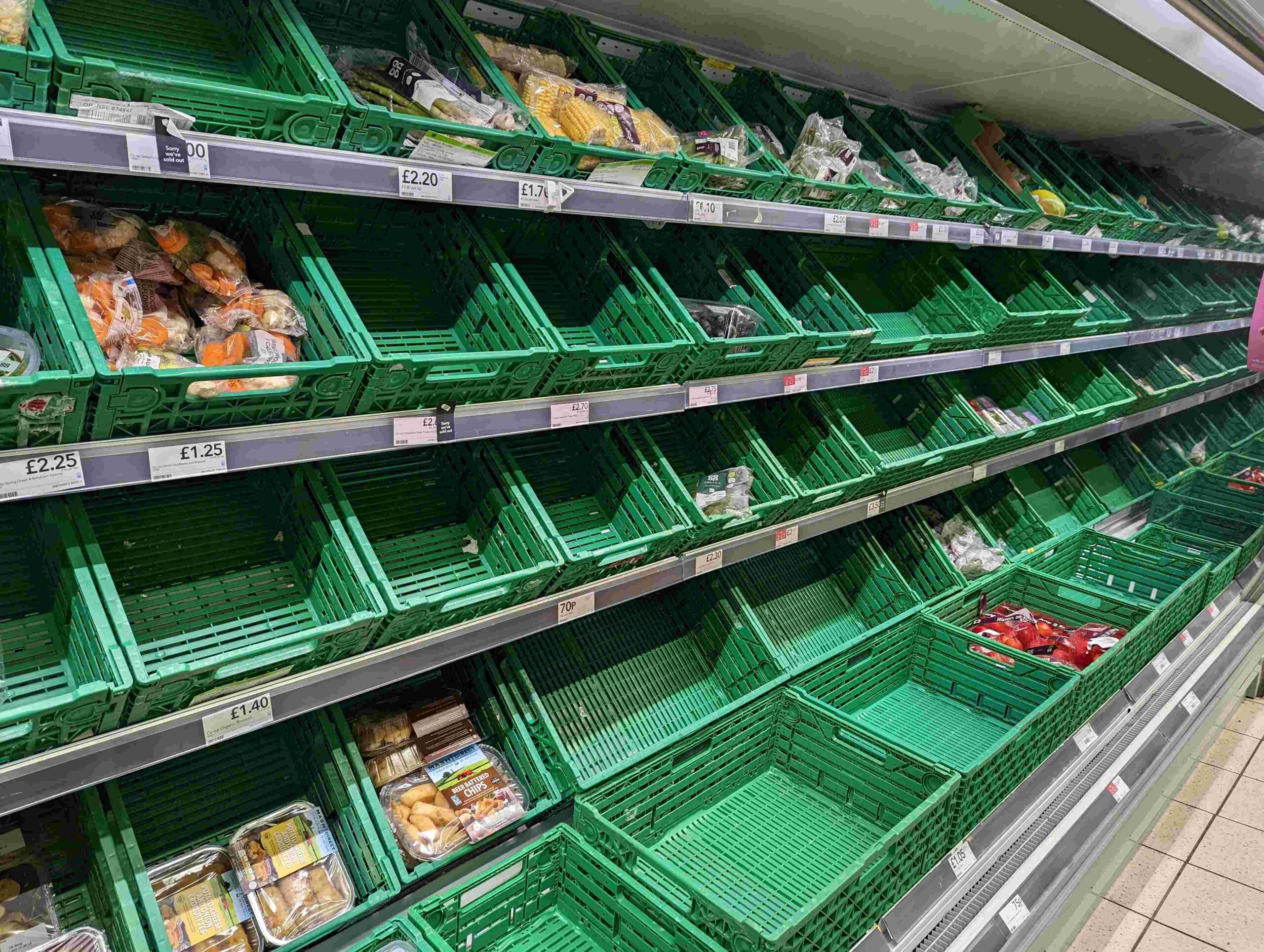
The Climate Change Committee thinks not for long, at least not without substantial change. On 20 May, just ahead of the heatwave, it published its fourth assessment of the UK’s climate risks (CCRA4), and food security features prominently. The verdict is bluntly that climate change is already disrupting global food production and supply chains, and the UK should expect higher and more volatile prices, with a growing risk of temporary shortages. Its central demand is that government and industry shift from reacting to shocks to anticipating them by stress-testing supply chains, monitoring the cost of a climate-exposed food basket and weighing whether the UK needs national food reserves.
That is a call for a more active, anticipatory state, and it came in the same week that the Treasury was reported to be exploring voluntary supermarket price caps on essential foods, drawing a furious response from an industry that wants to be left to compete. Price caps are not what the CCC is asking for, but the backlash showed how quickly hints of state intervention in food provoke resistance. That tension is running through this digest, with the evidence pointing to food security as a systemic risk while politics still treats it as a problem that the market can be trusted to solve. Here’s what the CCC found.
Quick Take
- The UK’s official climate risk assessment puts food security front and centre. The Climate Change Committee’s fourth assessment (CCRA4) treats food as a national-scale climate risk in its own right, warning of higher and more volatile prices and a growing risk of temporary shortages as climate change disrupts production and supply chains.
- Import dependency is the core vulnerability, and it is deepening. Almost two-thirds of the UK’s fresh produce comes from just ten countries, and nearly a quarter just from Spain. Around 18% of fruit and veg comes from countries at moderate-to-high climate risk; over half of legumes and 47% of fruit are projected to be imported from countries where climate change will make output more volatile. Extreme heat alone is expected to push food price inflation 1.1–1.8% above its long-term trend.
- The CCC’s first prescription is to secure supply by anticipating shocks, rather than reacting to them. It wants government to guarantee no shortages of nutritionally important food groups through 2050, stress-test global commodity markets such as fertiliser, feed and fuel for points of failure, and settle the long-dodged question of whether the UK needs coordinated national food reserves, as many import-dependent countries already hold.
- The CCC’s second prescription is to protect households from climate-driven food inflation, which falls hardest on the poorest. Lower-income households spend a greater share of their income on food, so price shocks are regressive by default. The CCC recommends government set a household-level food-price target and monitor the cost of a climate-exposed basket, tracking UK-produced and imported food separately.
- But the politics aren’t ready for any of it. The furious industry response to mere reports of voluntary price caps, amid post-election instability that has left the government’s position precarious, shows how reflexively any expansion of the state’s role in food is resisted. The evidence points one way; the prevailing doctrine still points the other.
Deep Dive
The exposure is structural, and deepening
The vulnerability CCRA4 describes is built into the shape of our supply chains. Around 18% of the UK’s fruit and vegetables comes from countries at high or moderate risk from climate change and extreme weather events in the UK’s supplier countries have been impacting food prices over recent years. Our dependency and vulnerability are expected to get worse. Almost two thirds of fresh produce imported into the UK comes from just 10 countries, and in 2024 almost a quarter came from Spain alone. Over half of legumes and 47% of fruit are projected to be imported into the UK from countries where climate change will increase the volatility of agricultural output. Food imports from Spain and Morocco will be particularly at risk from climate shocks, and even if other sources were found, the price implications of climate change will be pervasive. The Committee expects annual food price inflation to be 1.1 to 1.8% higher than the long-term inflation trend due to extreme heat (and not factoring in floods or other disruptions). By 2050, across global breadbasket areas, the probability of crop failure is expected to be 25 times higher than today.
The first recommendation: anticipate shock, rather than reacting to it
The CCC’s first strategy is to secure supply by getting ahead of disruption rather than dealing with it after the fact. It wants government to take steps to ensure there are no food shortages experienced in the UK for nutritionally important food groups in the period to 2050. Even though the food industry has managed to adapt reasonably well to disruptions to supply over recent years, the context is likely to become more volatile and there are no grounds for complacency.
That means stress-testing global commodity markets (including fertiliser, feed and fuel) and the UK food system’s ability to respond to shocks to identify and address key points of failure. It also means confronting the need for national stockpiling of critical food supplies, where many other import-dependent countries have long-established systems in place. On the supply side, the Committee advocates investment in resilient production practices in agricultural areas, including steps to reduce the effects of heat stress such as providing tree cover and shifting working patterns. Capacity building among farmers and growers to improve sustainability and efficiency and reduce food waste would also help. In addition, food supply chains need to be diversified to spread risk and build resilience.
The second recommendation: treat household food security as central, not an afterthought
The CCC’s second strategy is to seek to minimise the impact of climate-related food price inflation on UK household budgets. Food price inflation impacts lower-income households most, as these households spend a higher proportion of their income on food. The Committee recommends that a household-level food price target is set and the changes in price of a climate-impacted basket of goods is monitored, with separate tracking of UK-produced and imported food products. It’s a notably interventionist proposal and a measure of how seriously the CCC takes the distributional stakes.
The politics point the other way
The CCRA4 report was published in the same week that a controversy broke out over reports that the Treasury was exploring measures to cap the price of essential foods. Speculation that the Government was considering a plan for supermarkets to introduce voluntary price caps on basic food products such as bread, milk and eggs prompted a vocal and vigorous response – what the Financial Times called an “angry backlash” – from the food industry.[6] Former executive chair of Marks and Spencer, Lord Stuart Rose, said the idea would be “idiotic, dangerous and will never work”.
Climate and geopolitical turbulence have coincided with political instability in the UK in the aftermath of the local and devolved government elections. These rendered the Prime Minister’s political position more precarious and opened the prospect of a change of leadership of the Labour Party and hence the government this year. Political discussion has centred on the question of the degree of scope for action and alternative approaches to management of the economy.
Colm Murphy has explored the evolution of Labour’s approach to economic strategy under Keir Starmer and how a worsening macroeconomic and geopolitical context has challenged some key assumptions. Yet constraint is not the same as helplessness. Government still has levers it could pull. Tax changes, especially around VAT, may reduce some costs in supply chains, but savings are not always passed onto consumers. Market regulation can address monopolistic behaviour. Food retailers or manufacturers could be pressured publicly and politically. Or the benefits system could be adjusted to protect lowest income households from price rises. Over the longer term, addressing the costs of energy, fuel and labour costs, or changing immigration rules, could alter the cost base of the food industry. Yet even a change of Prime Minister is unlikely to shift the UK away from its market-led approach to food prices. The deeper obstacle is not constraint but doctrine.
What now?
If this was a tempestuous spring, the summer may be more ominous still. A potentially strong El Niño effect is developing which could further raise temperatures and reduce rainfall over Europe and North Africa. Heat and drought stress risk reducing cereal yields, increasing water scarcity and constraining irrigation. As the implications of the Iran conflict begin to impact British household finances later this year, we could see further climate-related pressures at a time when the UK Government is producing its new food strategy aimed at improving resilience and food security.
That timing is also an opportunity. The CCC has given government a clear brief: treat food security as the systemic risk it now is, and build readiness before the next shock rather than having to weather it. Whether these pressures will be strong enough to unsettle some hard-wired doctrines on the relative roles of the state and markets in shaping the way the food system works remains to be seen.